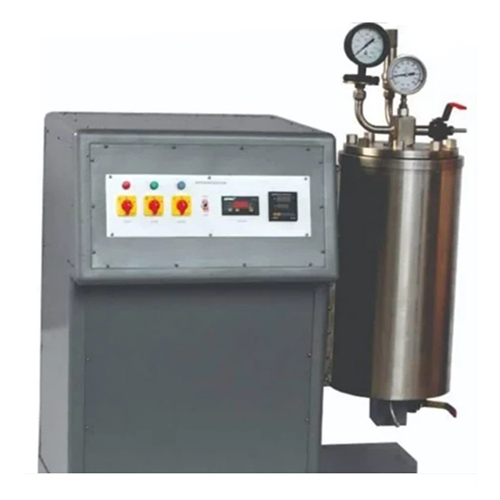
About Lab-Scale Rotary Pulp Digester
- Capacity: 10 Litres cooking vessel
- Maximum Pressure 15 kg/cm2
- Working Pressure 10 Kg/cm2
- Raw Material 3.0 Kg. wood chips approx.
- Digester body: Made of Acid Proof Steel.
- Autoclave /Boiler vessel Fabricated from stainless steel sheet.
- Electric Heating 3 Phase, 400 V, 6 kW.
- Rotating Frequency; Rotation with change of turning direction, ensures efficient agitation of the pulp.
- Motor Rating: 3 Phase, 440 V, 1/2 HP.
- Digital Temperature Controller The temperature controlled through high precision programmable controller Facilities for the programming of boiling parameters
Robust Construction & Advanced SafetyEngineered from high-grade stainless steel (SS 304/316), this rotary digester is both corrosion-resistant and durable. The chamber features mineral wool insulation for efficient heat retention and safety features such as over-temperature and over-pressure protection. Manual pressure-sealed lid locking and a safety interlock ensure secure operations during testing.
Precision Control & AutomationThe integrated PT100 temperature sensor, digital LCD display, and programmable timer allow for precise parameter setups. The 0.5 HP geared motor supports gear-driven rotation, with testing speeds adjustable between 10 and 50 rpm. Users can select AUTO or MANUAL control modes, enhancing operational flexibility to suit varied laboratory requirements.
Comprehensive Data Management & ComplianceData can be logged and exported via USB or RS485 interfaces, streamlining analysis and record-keeping. Conforming to TAPPI and ISO laboratory digestion standards, this equipment assures reliable, standardized results, making it ideal for quality-conscious exporters, manufacturers, and suppliers in India.
FAQs of Lab-Scale Rotary Pulp Digester:
Q: How does the Lab-Scale Rotary Pulp Digester ensure safe operation during high-temperature and pressure processes?
A: This digester incorporates over-temperature and over-pressure protection systems, a manual lid locking mechanism with pressure seals, and a safety interlock. Combined, these features safeguard operators and maintain optimal working conditions during pulp digestion.
Q: What is the process for operating the rotary pulp digester, and which control modes are available?
A: The unit supports both AUTO and MANUAL control modes. Users load specimens, set test parameters via the digital controller, and initiate the process. The gear-driven assembly rotates the vessels, while integrated heaters and sensors control temperature and pressure. Data is logged automatically and can be exported via USB.
Q: When is it recommended to use this equipment in laboratory settings?
A: This digester is best utilized in laboratories requiring standardized pulp digestion, batch refining, and pulp quality testing. Its design adheres to TAPPI/ISO guidelines, ensuring precise and repeatable results suitable for both research and industrial quality control.
Q: Where is the Lab-Scale Rotary Pulp Digester intended to be installed or used?
A: The equipment is intended for benchtop installation in laboratory environments. Its compact footprint, durable construction, and standardized power supply (220V AC) make it practical for both industrial and academic settings.
Q: What are the main benefits of using this rotary pulp digester compared to traditional methods?
A: The device offers double-walled insulation for energy efficiency, rapid heating up to 180C, precise digital control, and reliable safety features. Automated data logging streamlines workflow, and the robust build guarantees long-lasting performance and reproducible results.
Q: How is data managed and exported from the digester for further analysis?
A: Data from temperature, pressure, and process parameters are logged digitally, accessible through USB or RS485 interface for straightforward export, ensuring complete and accurate documentation of each batch processed.
Q: What is the specimen capacity, and how many vessels can be processed simultaneously?
A: The standard supply includes two 10-Liter vessels, with the ability to process up to four specimens (rotary vessels) at once. Each vessel can accommodate specimen sizes up to 300 mm, supporting diverse testing requirements.



 Send Inquiry

 Send Inquiry